Type: Resource:
Jugaad: A little book of know-hows from young people about Mental Health featured image

Jugaad: A little book of know-hows from young people about Mental Health

A guest resource written by Yashna Vishwanathan
Jugaad: A little book of know-hows from young people about Mental Health image
Yashna Vishwanathan is a mental health counsellor from Mumbai. This post is about Yashna’s campaign ‘Jugaad’, a little book of mental health know-hows, written by 14 young people.

Jugaad - A Little Book of Know-hows from Young People about Mental Health

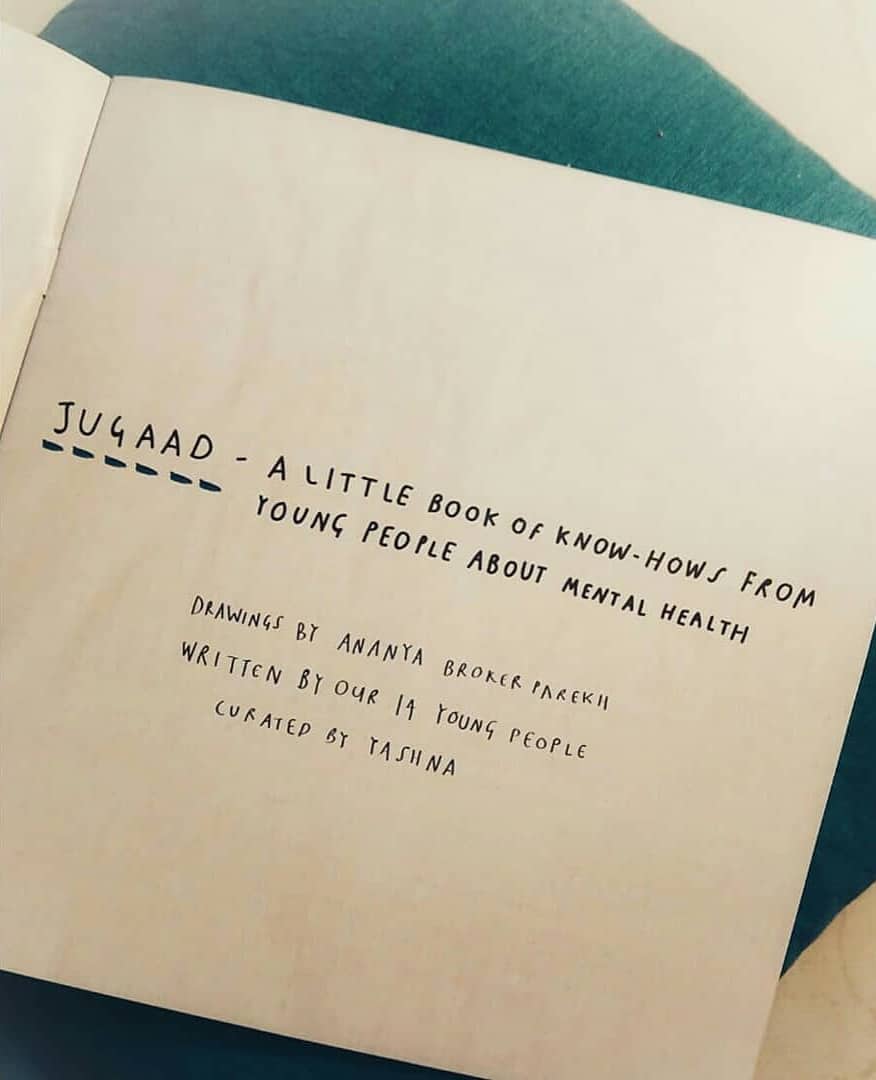
Jugaad is a little book on mental health shaped by the lived experiences of 14 really powerful voices by young people. Jugaad is co-created by Yashna and Raviraj from Ummeed Child Development Center (Mumbai) and has drawings by Ananya Broker Parekh. These young authors of Jugaad are from diverse social, cultural contexts across Mumbai who bring in diverse lived-experiences, that are of living with a disability, neurodiversity or different contextual experiences, all of which help us understand what mental health looks like to them.
About Jugaad Pic 1

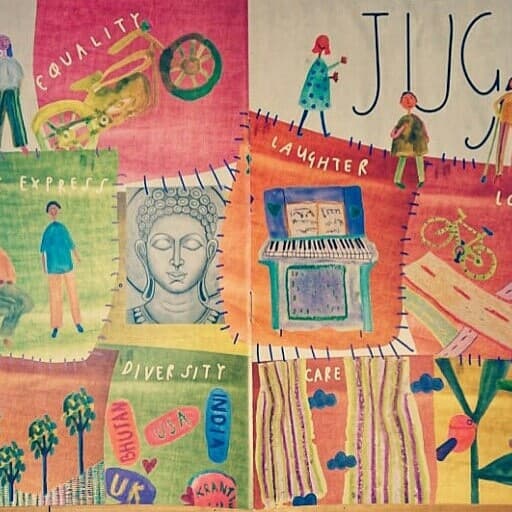
‘Jugaad’ is a word that is used across in several cities of India to describe life-hacks, know-hows people have to respond to everyday situations and problems. The book, ‘Jugaad’ hence hopes to make visible these know-hows that people have in responding to everyday mental health concerns, the ingenuity they develop, ‘little’ things they do to keep themselves mentally healthy.

Jugaad hopes to bring in an alternate literature on what mental health looks like to young people, and hopes for it to be a document that lives and grows through changing times, that has everyone adding in their know-hows, their jugaads through their understandings of mental health.
About Jugaad Pic 2

Team Jugaad hopes to make this book accessible to young people everywhere. If you want to get your hands on a copy, DM them here @mentalhealthjugaad and receive the book for free!
You May Also Want To Read

Tomorrow | Image

Tomorrow

A guest post.

Every failure I’ve ever faced has taught me fall down and bounce back as more stronger, bolder and tougher than ever.
Every place I’ve ever visited has brought me closer to my own home.

January 16, 2019 Read More

Curation? Aggregation? What's the difference? | Image

Curation? Aggregation? What's the difference?

What does “curated list” really mean? Is it simply a list of resources put together for easy navigation and access?

Short answer: No, it’s so much more!

We have been speaking about TheMindClan.com being a platform for 𝐜𝐮𝐫𝐚𝐭𝐞𝐝 lists of 𝐢𝐧𝐜𝐥𝐮𝐬𝐢𝐯𝐞 therapists, support groups and other mental health resources.
In this post, we share some details about what really goes into putting together an aggregated list v/s a curated list, so that you can know the difference and make informed choices in your personal mental health care. 🤗

January 10, 2021 Read More

A bright red sticky note | Image

A bright red sticky note

A guest post. Trigger Warning: Mentions of depression.

March 5, 2019 Read More

A collection of resources for mental health support | Image

A collection of resources for mental health support

With the outbreak of the novel coronavirus across the world, we are faced with real possibilities of isolation, contagion, and immense financial, social, and personal uncertainty. In response to these stressors, many of our bodies and minds are experiencing distress in the form of anxiety, panic, sadness, confusion or loneliness. Firstly, we want you to know that these feelings are okay to experience. Our distress is a natural and normal response to these conditions of uncertainty. These are hard times and none of us has experienced anything like this before. Our collective mental health is impacted and we need to acknowledge that with kindness. We are with you through this.

March 19, 2020 Read More

A Short Guide On Trigger Warnings | Image

A Short Guide On Trigger Warnings

What is a trigger warning?

A Trigger warning is a statement that cautions a reader about potentially disturbing or upsetting content. They appear in different ways on different platforms. Facebook, Twitter, and Instagram warn their users about triggering images by blurring them out. Most platforms however, do not offer any trigger warning features. This means that the responsibility of informing whether the content could be distressing, falls onto you, the user.

May 31, 2020 Read More

You already have the skills, intentions, and the know-how to care for your mental health. Learn how we can help you discover them 🙂 Find Counsellors.
Support Groups & Sharing Spaces.
Self Care Events.
Stories & Resources.
Helplines.