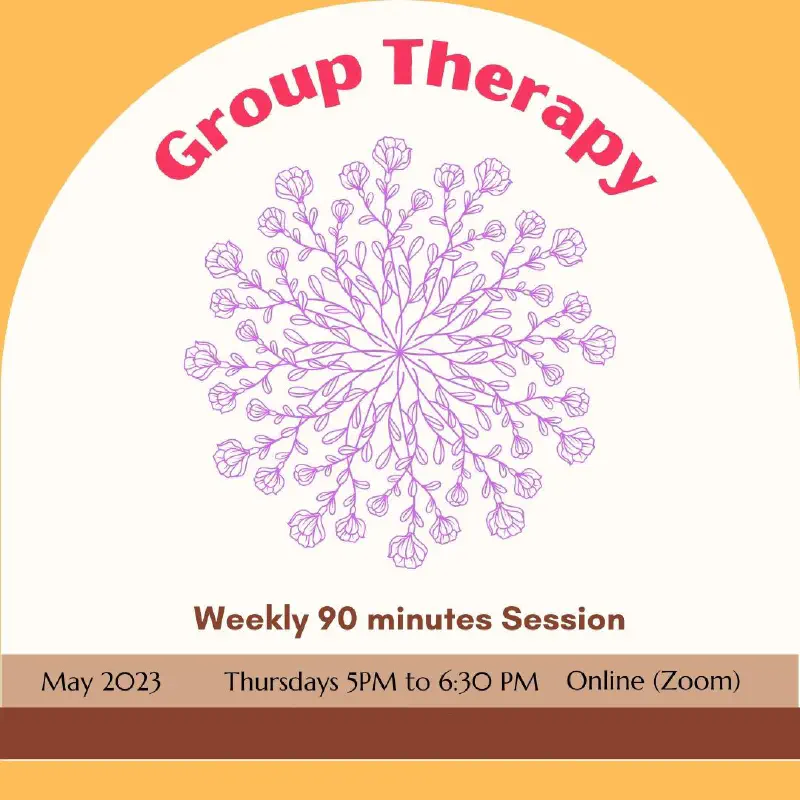
This is designed to be an long term group for individuals willing to understand themselves better in the context of their relationships to other people.
Groups are where we begin, and hold immense potential to hold, challenge and heal.
Ayesha Sharma is a trauma-informed, queer-affirmative psychotherapist who has extensive experience working with adolescents and adults in groups over the past 5 years through the use of expressive arts and talk therapy. She also has been in group therapy for many years. Ayesha has a Masters degree in Clinical Mental Health from University College London (UCL) and is a group- analyst in-training.
Notes: The above information may change from time to time, and is shared with you to understand the background of where the support group comes from.The group’s founding story is to bridge the gap between need for therapy and affordability of individual therapy, as well as the lack of group therapy spaces in India to better understand oneself and one’s emotional distress in the context of their relationships with others.
This group is for people looking for a therapy group, and not a typical support group. It is designed for anyone looking to work through their emotional distress interpersonally. With other people. It is not narrow in its focus. Therefore it is not catering to one section of people, rather it is open to anyone looking to better understand themselves and their concerns through their relationships with other people in the group setting in a moderated way with the presence of a group therapist.
This space endeavours to help understand your experiences better by bringing your difficulties to the group, finding connection with others with similar or different experiences and making meaning collectively in a safe space.
The group is a therapy group rooted in group analytic principles, it is agendal-ess and hopes to meet people where they are. The only ask is to bring oneself to the group space as honestly as possible, and it is through one’s own sharings and others’ sharings that hopefully people can know themselves more, find belonging and also be supportively challenged in their perspectives so one can be best supported.
The group can support most conversations that come up, if the group is limited in helping with certain conversations, appropriate referrals are made.
Just as with individual therapy, there is no format to this group therapy space. It is not regimented, but rather a space where you bring yourselves and it is through relating to the members of the group that something rich emerges that is helpful.
Confidentiality, regularity and honesty
Just like with individual therapy, group therapy cannot have quantifiable or definite takeaways after each session. It is a process which requires engagement over time. The hope is that it lends support, a feeling of belonging and allowing oneself to be challenged when thinking about emotional difficulties!
Hit the button below, ask questions, clear doubts or anything else you might need to clarify. Youβve got this! π
Profile details
Learn about the gathering's approach, specialties, and how they can support your mental health journey.
Take the first step by reaching out to 'Group Therapy' and start a conversation about your needs.
Determine if this is the right match for you and plan your journey forward.
Not finding what you're looking for?
View other events & support groupsWhile we carefully curate our listings, we encourage you to make your own informed decisions. Take time to research, ask questions, verify credentials and choose what feels right for you. Your comfort and safety is top priority.
We've developed a curation process over 7+ years, which allows us to carefully curate each inclusive and affirming mental health provider listed on our platform.
We have come a long way since we started in 2018, and have been adapting our curation process every day. From the time a therapist or support group reaches out to us, it takes about 1 - 2 months to complete the process.
We launched TheMindClan.com because we know firsthand how challenging it can be to find support for ourselves and our loved ones. We know that experiences of neurodivergence (like dyslexia, ADHD, autism, etc), or being from a marginalized community (LGBTQIA+, etc), can make it especially challenging to find support.
We understand the overwhelming feeling of scrolling through endless lists, wondering whom to trust, and not knowing what to expect.
If you appreciate our mission of making mental health care accessible and inclusive, and would love to bring this to your organization or collaborate with us, we'd be delighted to hear from you!