This meetup is part of our handpicked list of communities 🤗
Carefully curated
Community-led
Reach out directly. No Gatekeeping.
Individuals between the age of 26 to 34 year olds
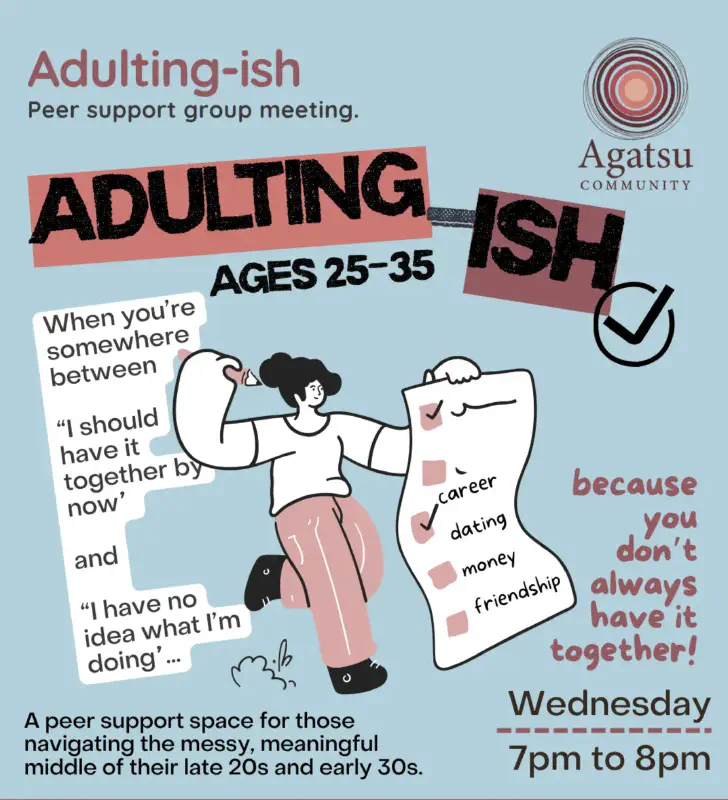
Individuals between the age of 26 to 34 year olds. It is for the older youth to come together and talk about their lived experiences with peers.
A peer support space for those navigating the messy, meaningful age of 26 to 34 years.
This isn’t therapy. It’s not networking. It’s not about having it all figured out.
It’s a space to be real - about career shifts, burnout, dating fatigue, friendship changes, money anxiety, identity crises, quiet wins, and all the weird in-betweens.
If you’re somewhere between “I should have it together by now” and “I have no idea what I’m doing,” you’re not alone. We meet to share stories, ask honest questions, and listen without fixing each other.
When I started the Youth Peer Support at Agatsu, it became clear that there were 27-28 years olds wanting to find a place where they could share their experiences and feel understood. That made us realise the importance of starting a space for the older youth to come and share with peers who might be facing similar issues in their life at that moment.
The facilitator is a person of lived experience. Her name is Smritee Paul. She has completed her suicide prevention instructor training from QPR. Has trained over 100 people in suicide prevention and the skills required to be a Gatekeeper (empathy, boundary setting, etc). She currently works at Agatsu Foundation as the community centre and outreach head.
Notes: The above information may change from time to time, and is shared with you to understand the background of where the support group comes from.It will start from August 2025. We hope to provide people between the age of 26 to 34 to feel understood and heard. Where individuals who have decided to live life on their terms not feel completely alone in the process. To talk about experiences and situations we might not be able to share elsewhere.
Individuals between the age of 26 to 34 year olds. It is for the older youth to come together and talk about their lived experiences with peers.
At the end of every session we conduct a grounding technique. This is a great way for members of the group to try different grounding techniques that would be helpful to them in moments of stress, anxiety or anger. Our topics also discuss are around self reflection, self identity, belief systems, stressors, and the relationships we keep. It’s helps make the individual more aware of the decisions they make and the things they can do for themselves.
We run a therapy clinic at our centre where individuals can avail therapy on a sliding scale from starting from Rs 50 to Rs 750. We also have an extensive referral system to provide individuals help and support in the way they need it. All our staff at the centre is trained to provide immediate help when needed.
Conversations around severe mental health disorders, harm to others, violence are conversations we aren’t equipped to support. We do not have the resources to help people with mental health disorders within our organisation. However, for that reason we have created a list of vetted psychologists and organisations that work in that field.
We start the session on time. The session is started with the general rules and protocols of the peer support, followed by an introduction of the facilitator and the mental health professional present. We then get started into the topic of the meet. We ask starter questions or prompts that may help members contribute to the conversation. The session last for one hour. In the last five minutes, we conduct a grounding technique to leave people on a more calm and present space.
The organisation has certain code of conduct which all participants must follow. Any conversations that preach or put down any particular religion or political party is strictly not allowed. We also make sure that members or aware that the peer support is not a replacement for therapy, but rather a space to share, talk and listen. The peer support is confidential and any personal details that anyone shares will not be spoken of outside of the meet.
We hope that each participant at the end of the meet feels like they are not alone. They are able to reflect on their own thoughts and actions. That they’re able to better communicate their feelings in a safe environment.
Hit the button below, ask questions, clear doubts or anything else you might need to clarify. You’ve got this! 🙂
Profile details
Learn about the gathering's approach, specialties, and how they can support your mental health journey.
Take the first step by reaching out to 'Adult-ish Peer Support' and start a conversation about your needs.
Determine if this is the right match for you and plan your journey forward.
Not finding what you're looking for?
View other events & support groupsWhile we carefully curate our listings, we encourage you to make your own informed decisions. Take time to research, ask questions, verify credentials and choose what feels right for you. Your comfort and safety is top priority.
We've developed a curation process over 7+ years, which allows us to carefully curate each inclusive and affirming mental health provider listed on our platform.
We have come a long way since we started in 2018, and have been adapting our curation process every day. From the time a therapist or support group reaches out to us, it takes about 1 - 2 months to complete the process.
We launched TheMindClan.com because we know firsthand how challenging it can be to find support for ourselves and our loved ones. We know that experiences of neurodivergence (like dyslexia, ADHD, autism, etc), or being from a marginalized community (LGBTQIA+, etc), can make it especially challenging to find support.
We understand the overwhelming feeling of scrolling through endless lists, wondering whom to trust, and not knowing what to expect.
If you appreciate our mission of making mental health care accessible and inclusive, and would love to bring this to your organization or collaborate with us, we'd be delighted to hear from you!