Vani is part of our handpicked list of therapists 🤗
Carefully curated
Peer-referred
Reach out directly. No Gatekeeping.
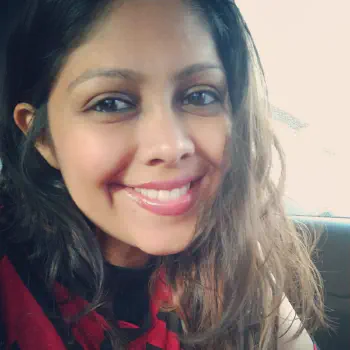
Vani (She/They) is a 35 year old mental health therapist from Bengaluru. They practice online. They identify as 🌈 Queer.
While I’d like to have a more linear origin story, therapy found me gently, in pockets, at times when I was trying to integrate my educational training in the field of psychology with my capacity to be interested and invested in people’s stories. My own time spent in therapy helped me understand the process’s nuances and scope and I chose to build on this skill to be able to offer it professionally.
Located in the Global South, I was taught how to offer therapy from a Western lens. And I noticed myself feeling incomplete in the training and in my body as I was trying to work with individuals. Some years later, through a lot of intentional searching and effort, I found my voice in therapy and learnt that I am excited to hold space for people as they notice, learn, unlearn and unpack ideas they’ve known as ‘given’ and ‘unchangeable’. I’m excited at the prospect of gently unpacking systems’ capacities to facilitate or interrupt growth and building spaces for collective care and responsibility.
I’m hoping that the people I work with feel able to ‘come as they are’. Sometimes they may have had an experience (s) of therapy before or come with ideas of what it might be. I’m open to them bringing questions, hopes, ideas and anything else that is alive for them. After our first session, my hope would be for them to carry the knowledge that this is a relational process that does so much more than ‘address some issues’. And that it is slow and gentle and will honor their space, knowledges, skills and safety as we go along. I invite people to document, in any way they are called to, anything they find interesting, important or something they’d like to sit with after our session as a way to stay in contact between meetings.
I’ve been practicing for over eight years, with four exclusively being in my own independent practice. My experience has been that people often reach out to try and work with a specific issue or set of issues. Given time, money, intensity of distress and other variables, there is often a sense of urgency to center the problem in conversations. It also matches the popular ideas that one approaches a counselor to ‘fix or reduce the impact of whatever’s bothering them’. This can feel like a lot of pressure to ‘get to the root of the problem’, ‘asking for tools and fixes’ and ‘wanting to share all the relevant information as soon as possible’.
I’d like a client to know that therapy can look like a slower, intentional process that isn’t supposed to re traumatize you or require long, linear narrations of ’life history’. That it can be unusual for us to set aside money to invest in time to talk about ourselves. I urge them to imagine therapy as an exploration where one is leading with curiosity as opposed to criticality. It can feel frustrating or heavy sometimes. Therapy to me, can’t be inclusive if we leave our politics outside - the very real impacts of gender, caste, culture, patriarchy etc. And that’s something some clients look for more specifically while others might align to more popular forms of therapy. I would also love for clients to ask lots of questions. Get to know the therapist’s experience, how they answer questions, their availability - see how they make you feel. There are as many types of therapists and therapy as there are individuals. Ask around a little bit if you have the time and space to do so before making a decision.
I like to invite lightness into my therapy sessions. I’m keen to learn who the person is in front of me, their hopes and dreams, the things they cherish, their unique skills and bodies of knowledges. I encourage the person to get creative in the way they want to bring information and stories into the room. That could look like writing, pieces of music, movement, art, silence or anything else. Additionally, if we are meeting online, I like to learn a bit about whether they see that as a safe, uninterrupted space to speak from, any concerns around data and the internet etc. I also name my social position and how the possible intersections that contribute to my identity, may offer me some privileges and how I try to not let that shroud someone else’s reality.
People’s ability to hold multiplicities and nuance in a world that pushes for polarities is the single most inspiring experience for me to witness and hold in therapy spaces.
That people are extraordinarily knowledgeable in their lives. And are constantly responding to and resisting difficult things in their lives. That ideas, hopes, values and intentions survive in the most unique or difficult circumstances and have guided them in their lives. That I am a co- researcher at best in that journey.
Hard work :) I see myself as preparing, documenting, sharing and really seeking to build and sustain a relationship with the person in front of me. And that hard work isn’t limited to sessions. In a field such as this in India, I find it even more important to learn, study and build accountability amongst practitioners, as there aren’t existing systems that hold counseling practitioners accountable for possible harm. I also like that I bring lightness to our session and offer several alternatives to spoken word for people in our work together. Lastly, I am in work for myself with therapy and supervision in addition to not overextending myself through the week. I acknowledge the emotional resources that this field requires and do things that nourish and sustain that to be available to people.
I sing with a band, in my city of stay :) Performances with the band are very exciting to me. I am also interested in attending exhibitions, flea markets, community and live events in the city. I deeply enjoy traveling and try to do that as often as possible. I have started to be more interested in cooking and also have found my love for reading again. I share space with a cat and I enjoy playing with him.
My training is a form of therapy that borrows partly from psychology, but also heavily from feminist liberation movements, literary theory, anthropology, social justice movements, indigenous knowledges and culture studies. Quite a mouthful?
I’m drawn to working with language - what do we mean when we say something? How do we perceive it? How is meaning made in our unique contexts, culture etc. and what is the impact of that on us? How do we tell stories of ourselves and where do we locate ourselves in the world? I draw a lot from nature and nature metaphors - what do we observe, what phenomenon in nature mirrors us and what do we learn from observing, spending time in and using nature as a metaphor to understand our lives? Second, we have many parts of us that are in constant movement. Some get prioritized, some feel difficult and are kept away. Some find it hard to co-exist. I seek acquaintance with all parts of you and what information they seek to provide. While I adhere to confidentiality, a big focus of my work is to reduce isolation by linking my client to stories, projects, resources and movements in the world that may have shared experiences and tips and knowledges. Not all the answers lie in a therapy conversation and a big focus is on helping build or strengthen connections to multiple places of support, acknowledging that connection can lie literally anywhere.
My work and stances are deeply political and by that I don’t mean - who you vote for. I am anti oppressive practices, trauma informed, feminist, anti-patriarchy, liberation driven, queer, neurodivergent and am quite firm about acknowledging and being transparent about the impact of the intersection of our different social locations. If this feels like a lot of words or unclear, I encourage people to ask me about this when they reach out. I seek to honour differences rather than pretend they don’t exist or don’t matter. And I seek to work with people that are interested in this lens rather than a more general approach to work.
This section can hold a lot of big words/ jargon. Please feel free to ask me about them if you’re unclear.
I’m a queer and neurodivergent person. While I have access to literature and lived experiences, safety, affirmation and advocacy in a therapeutic context is broader. It is a constant process of examining, unlearning, asking and staying close to the philosophies, movements, actions, voices and stories of these folx. Can I recognize and work on my biases and ‘knowns’? Do I work extra hard to remember how intersectionality makes every person’s situation unique? Can I acknowledge when I may not be trained or adequately resourced to support a queer or trans person?
What are the efforts I’m making to be aware of local helplines, legalities and available options in the client’s geography and culture if they were to avail services? What does safety look like for a person in a session? What allows someone to trust me to share these parts of their identity with me?
When I’m working online, what accommodations do I make for sensory needs or other needs and invisible disabilities? These are some things I’m attempting to not just welcome queer, neurodivergent or disabled folx to my practice, but communicate an active interest and advocacy for practices that are more inclusive.
I know I'm no doctor but if I was guessing I'd say it was just growing pains And painful as growing is we can't forget it's our ticket to taking the reins And we'll all be okay, we'll be okay
Hit the button below, ask questions, clear doubts or anything else you might need to clarify. You’ve got this! 🙂
Learn about their approach, specialties, and how they can support your mental health journey.
Take the first step by reaching out and start a conversation about your needs.
Determine if this is the right match for you and plan your journey forward.
Not finding what you're looking for?
View other profilesWhile we carefully curate our listings, we encourage you to make your own informed decisions. Take time to research, ask questions, verify credentials and choose what feels right for you. Your comfort and safety is top priority.
We've developed a curation process over 7+ years, which allows us to carefully curate each inclusive and affirming mental health provider listed on our platform.
We have come a long way since we started in 2018, and have been adapting our curation process every day. From the time a therapist or support group reaches out to us, it takes about 1 - 2 months to complete the process.
We launched TheMindClan.com because we know firsthand how challenging it can be to find support for ourselves and our loved ones. We know that experiences of neurodivergence (like dyslexia, ADHD, autism, etc), or being from a marginalized community (LGBTQIA+, etc), can make it especially challenging to find support.
We understand the overwhelming feeling of scrolling through endless lists, wondering whom to trust, and not knowing what to expect.
If you appreciate our mission of making mental health care accessible and inclusive, and would love to bring this to your organization or collaborate with us, we'd be delighted to hear from you!