Megha is part of our handpicked list of therapists 🤗
Carefully curated
Peer-referred
Reach out directly. No Gatekeeping.
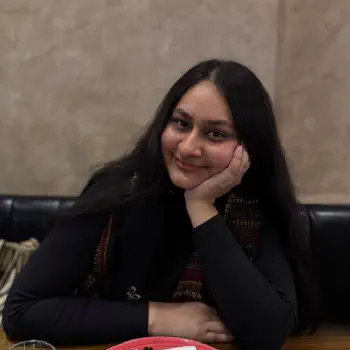
Megha (She/Her) is a 26 year old mental health therapist from Jaipur. They practice online.
I’ve always been curious about what’s beneath the surface, silences, tensions and things that are not easily said. Having had my own share of emotional experiences and undercurrents, I often tried to make sense of them, until I realised I didn’t have to do that alone, and could allow support. Becoming a therapist felt like a natural extension of that way of being. It allows me to sit with people in their complexity, to explore how relationships shape us, and to stay with what unfolds in the space between two people.
Getting to witness people’s lives and ways of being moves me! To be able to hold their vulnerabilities with care, and to offer a different kind of relational experience, one that is steady, curious, and attuned feels deeply meaningful.
I hope a quiet possibility opens up, that life’s deeply discomforting moments can be navigated with someone and not alone. I also hope something about the first session feels a little more human than expected.
Thinking about seeking support through therapy shows how much care one holds towards their psychic life and inner world. You have the right to be uncertain, to protect parts of yourself, and to take your time. The process is yours.
I hope to build a relationship that is based on trust and respect. I believe the therapeutic relationship is central to the process of therapy, and I invite all kinds of experiences like discomfort, confusion, even reactions to the therapy itself. Therapy becomes collaborative when both client and therapist can stay curious about what unfolds between them.
That we’re all trying, often in unseen ways and operating in the ways we’ve known best. Even when those ways no longer serve us, they’ve often been essential for getting through something.
My curiosity towards people, their inner worlds, relational patterns, and histories. I try to look beneath symptoms to understand what they might be protecting or communicating. I also value my ability to stay with uncertainty and not rush the process, allowing space for things to unfold in their own time.
I like listening to music, doodling, cooking myself a meal, and spending any and every bit of free time in nature. Being outdoors, whether walking, sitting under a tree, or just watching the sky helps me slow down!
I work from a relational, psychodynamic approach. I try to understand what you’re going through not just by looking at the immediate problem, but by exploring your emotional world, past experiences, and patterns in relationships. The therapy space becomes a place where these patterns can be noticed, understood, and reflected on together. I pay close attention to what emerges in the therapeutic relationship itself, as it often reflects deeper patterns.
I approach this as an ongoing process of learning, unlearning, and reflection. I regularly engage with queer-affirmative literature, attend trainings, and seek supervision.
Interpretations are not curative. Relationships are.
Hit the button below, ask questions, clear doubts or anything else you might need to clarify. You’ve got this! 🙂
Learn about their approach, specialties, and how they can support your mental health journey.
Take the first step by reaching out and start a conversation about your needs.
Determine if this is the right match for you and plan your journey forward.
Not finding what you're looking for?
View other profilesWhile we carefully curate our listings, we encourage you to make your own informed decisions. Take time to research, ask questions, verify credentials and choose what feels right for you. Your comfort and safety is top priority.
We've developed a curation process over 7+ years, which allows us to carefully curate each inclusive and affirming mental health provider listed on our platform.
We have come a long way since we started in 2018, and have been adapting our curation process every day. From the time a therapist or support group reaches out to us, it takes about 1 - 2 months to complete the process.
We launched TheMindClan.com because we know firsthand how challenging it can be to find support for ourselves and our loved ones. We know that experiences of neurodivergence (like dyslexia, ADHD, autism, etc), or being from a marginalized community (LGBTQIA+, etc), can make it especially challenging to find support.
We understand the overwhelming feeling of scrolling through endless lists, wondering whom to trust, and not knowing what to expect.
If you appreciate our mission of making mental health care accessible and inclusive, and would love to bring this to your organization or collaborate with us, we'd be delighted to hear from you!