Krishnaa is part of our handpicked list of therapists 🤗
Carefully curated
Peer-referred
Reach out directly. No Gatekeeping.
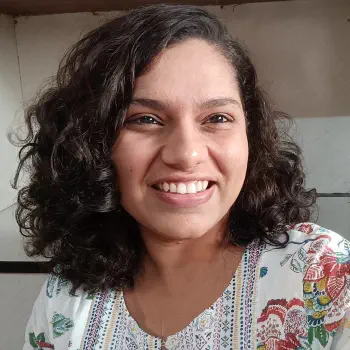
Krishnaa (She/Her) is a 26 year old mental health therapist from Mumbai. They practice online.
I don’t think I ever sat down and decided, “I want to be a counsellor.” It was more like the path kept revealing itself, and at some point, I realized this is where I belong. Truthfully, though, I came to counseling first through my own struggles with mental health. My initial interest in psychology wasn’t about helping others, it was about trying to make sense of and help myself. Over time, I realized that helping others hold their own experiences with care and attention felt like a natural extension of that journey.
What excites me about counseling now isn’t just “studying the human mind”, it’s the process of having deep, vulnerable, and honest conversations. For me, the heart of this work is the trust that gets built when someone opens up and genuinely allows me to listen to them. There’s a sincerity in those moments where we dive into difficult or tender places together in our lives, and then resurface, changed, lighter, and more aware. That unique pathway I co-create with each individual in the attempt to help them is what keeps me drawn to this work.
Looking back, I see that this work pulls together everything that matters to me: curiosity, creativity, empathy, power of connection and the belief that people can bloom when they’re given the appropriate conditions to. What began as a personal need became a way of being with others, and through it, I’ve found a sense of purpose and meaning that I carry into every session.
What excites me is discovering how each person brings in a whole new world, and I often leave sessions with a sense of wonder at how people think, feel, sense, intuit, and make meaning of their lives. It is also exciting to notice the small shifts such as a client trying something they were once afraid of, or finding words for a feeling that was unnamed for years. These moments remind me of the strength and resilience people carry within them. I also value how the work keeps me honest with myself. Counselling requires me to stay present, curious, and aware of my own blind spots. That process of learning and unlearning, alongside my clients, makes the work feel alive for me.
I hope that clients leave their first session with some clarity about what to expect. I want them to feel understood and that they can begin to trust me. I also want them to sense whether we are a good match for each other and that we feel somewhat ready to engage in the therapeutic process together. It is important to me that they feel they can be honest, share feedback, and have a say in the process. I want them to feel that they are not alone, that the work needed to work through their concerns is possible, and that the space we have created together is one where they can explore, reflect, and grow safely.
Hi, It is brave of you to seek help. Please pat yourself on the back :) I would gently caution you that sometimes it takes longer than you expect to find a therapist who truly fits your needs. That search can feel heavy, exhausting, even unfair. But don’t let a few difficult experiences make you think the process has failed. Therapy does work, and finding the right fit can take time. It is a trial and error process. So be kind to yourself. Bring your questions, your discomforts, and your hesitations to your therapist. Conflicts are a natural part of any relationship, and in therapy, they become opportunities to notice your patterns, name the forces that have failed you, grieve what you should have received but did not, and have your pain witnessed. This can allow you to experience a corrective, healing space compared to the painful ones you’ve carried from the past. Conflict or discomfort in therapy is meant to be faced together at your pace, not to be pushed away. If you have encountered any unethical, exploitative, or unkind professionals, I am deeply sorry. You deserve care that is safe, steady, and compassionate. Therapy may not feel right for you right now, and that is okay too. I would encourage you to keep finding ways to care for yourself and follow your truth.
The kind of relationship I want to build with my clients is one where they feel included, seen, and respected. I want this to be their space, and we work together at a pace that feels right for them. I often speak tentatively, inviting them to share how they see the world rather than imposing my own interpretations. I also offer choices in reflection, like inviting them to notice what stood out to them or summarize their learning, so they can actively co-create meaning from their experience. I make the process collaborative by checking in, taking ongoing feedback, and informed consent. Before bringing in any intervention be it art, journaling, or movement in a session, I always ask if they feel comfortable or would like a different approach. Honest communication is central to my practice, and I encourage them to share what feels helpful or challenging in the session without trying to tell me what they think I want to hear from them. Ultimately, I want them to feel trust, not just in me, but in themselves and in the process. I hold a space that is supportive and contained, while giving them agency over their journey. The goal is to walk alongside them, honoring their voice, their pace, and the way they see the world.
One of the deepest lessons my clients have taught me is the power of presence. What they often need most is not someone with all the answers, but someone who listens, witnesses, and shows up fully with them. They remind me constantly that therapy is about connection, honesty, and mutual trust over techniques to resolve problems.
I have also learned how strong and adaptive people can be, even when life has been deeply unfair or painful. Their courage, even in small moments, humbles me and pushes me to look honestly at my own assumptions, biases, and privileges. It has made me realize that growth in therapy is a shared journey: as I guide them, I am also learning and reflecting on myself.
Every client is like a kaleidoscope. Their stories, struggles, and ways of coping are rich, wise and unique. Witnessing their challenges and victories has taught me to honor both their humanity and my own. It has reminded me that compassion starts from recognizing our shared vulnerability and our capacity to heal, bit by bit, together.
One of the strengths I most value is my ability to make people feel seen and accepted. I try to offer a gentle, steady presence so courage and curiosity can come forward at their own pace. When people arrive with painful or confusing feelings, I aim to hold a calm space where they do not have to perform in the therapy room. I bring close self-awareness and reflection into my work. I notice my own patterns and how they show up in the room, and I use that awareness to stay attuned to what the client needs. This helps me pick up on subtle cues in how someone is speaking, moving, or holding themselves. I am also comfortable working through grief and complex emotions, and I prioritise feelings over quick solutions. Building a strong therapeutic relationship matters more to me than rushing into techniques. I prefer to sit with what is happening, to listen carefully, and to invite exploration rather than push for immediate change. I use metaphors and expressive arts where they help people name and explore their experience in a way words alone sometimes cannot. My approach is trauma informed, and grounded in compassion. I am persistent and committed. I work ethically and bring careful reflection and critical thinking to each session. Above all, I try to be steady, compassionate, and honest so people feel supported in doing the hard work of healing. If you choose to work with me, you can expect a warm, attentive space where we slow down when needed, name what matters, and work together at a pace that feels right for you.
I often sit and listen to music while gently swinging at home. It helps me escape reality for sometime and get lost in the safety of my imagination. I enjoy watching stand-up comedy for a good laugh, and I read feel-good books that offer comfort and help me hold onto hope after a long day. Connecting with friends and loved ones is important to me. Sometimes I record private, podcast-style conversations to capture memories and the small moments that matter. I try to “touch grass”, go outside and be in nature, instead of doom-scrolling, even if it’s just for a few minutes. I like watching videos and interviews about the arts and people I admire on YouTube. I’m also drawn to esoteric meditation videos and enjoy finding recipes that feel nourishing for the body and the soul.
I work by understanding what you’re going through and supporting you in the way that feels most helpful at a pace that feels manageable for you. I see you not as something to fix, but as a whole person whose feelings, thoughts, and stories make sense given what you have been through in life.
In other words, I don’t ask, “What’s wrong with you?” I ask, “What happened to you, or what didn’t happen to you, that should have?” I want to know the creative ways you’ve learned to cope and survive, the quiet intelligence of your body and mind in choosing those ways, and the wisdom that lives inside those parts that refuse to change and bring you to therapy. I’m curious about what is waiting to grow through what hurts you, and what you might become if given the right conditions. I look at how community shapes us, what needs have gone unseen, what pain needs to be witnessed, and what energy is ready to move and finally come to rest.
At times, words may not be enough for what needs to be expressed, and I may invite you to turn to the arts, including dance, drama, music or visual art, to help what has been held inside come out safely. Together, we go beyond our conscious understanding into what your body remembers, including feelings, sensations and memories that may not have words yet.
Creativity and art allow us to hold and contain the many contradictions of life and those within ourselves, such as fear and courage, silence and expression, knowing and not knowing, and pain and possibility. Through this, we don’t just make sense of our experiences, we begin to feel and move through them, which often brings clarity, release, and change.
I rely on my intuition and honesty to build a genuine relationship with you, where my own humanity, my vulnerability and imperfection, becomes my strength and an invitation for you to bring yours. This is the heart of how I work.
My therapeutic practice is trauma-informed, Queer Affirmative and rooted in Person-Centered Therapy while integrating a Social Justice lens. I understand that who we are, and how we relate to ourselves and others, is also shaped by forces beyond us: cultural narratives, systemic power, privilege, and oppression. Therapy, to me, is not just about insight but about reclaiming agency, making space for self-discovery, and honoring the realities we carry. Healing to me is non-linear, layered, contextual, deeply personal, communal nested within relationships.
I make a conscious effort to co-create a safe and brave space for queer and trans clients by using inclusive language and continually educating myself on terms that emerge from the community. I engage with books, events, media, discourse, and literature that reflect queer and trans lived experience and realities. I also participate in supervision, and peer consultation to examine my own biases and blind spots. I have been formally trained in Queer Affirmative Counseling Practice by the Mariwala Health Initiative, which has strengthened my understanding of the unique needs, life stressors, systemic inequalities and experiences that influence the life of queer and trans people. In sessions, I take a tentative stance while reflecting back what I hear and inviting clients to share their experiences as they perceive them. I respect each client’s self-determination regarding gender and sexual orientation. I acknowledge both the commonalities and the unique experiences of queer and trans individuals. I remain attentive to the intersections of identity, including caste, class, and disability, and how they contribute to the resources we have and do not have access to. I strive to honor the whole person in my approach. I seek regular feedback from my clients every few sessions, remain accountable for my verbals and non-verbals, and am open to offering reparation when I make a mistake. I provide visible cues of affirmation, such as pronoun sharing, and inclusive intake forms. I invite clients to co-create the therapeutic space, shaping boundaries and practices in ways that feel safe and supportive for them. I strongly condemn any attempt to “cure” queerness. I follow the strictest standards of confidentiality, understanding the real risks clients face if their identities or lived experiences are disclosed without consent. I recognize that distress comes from social inequalities and systemic injustice, not because anything is inherently wrong with the client. My commitment is to uphold the client’s dignity, validate their experiences, and provide a space where their identity is fully honored. I remain aware of the historical and ongoing harm done by society and psychological institutions, and I hold myself accountable to be part of the collective work of repair and justice, both in my practice and in the world around it.
“I still dont know what I want to do, or what I can do. What I do know is that there is no need to panic, or do more than I can cope with right now. For the time being, I plan to simply get my life in order and learn some new skills, choosing from whats available. Ill prepare myself, like Guri and Gura gathering chestnuts in the forest. Because I never know when I might find my own giant egg.” – Michiko Aoyama, translated by Alison Watts from ‘What you are looking for is in the library’
Hit the button below, ask questions, clear doubts or anything else you might need to clarify. You’ve got this! 🙂
Learn about their approach, specialties, and how they can support your mental health journey.
Take the first step by reaching out and start a conversation about your needs.
Determine if this is the right match for you and plan your journey forward.
Not finding what you're looking for?
View other profilesWhile we carefully curate our listings, we encourage you to make your own informed decisions. Take time to research, ask questions, verify credentials and choose what feels right for you. Your comfort and safety is top priority.
We've developed a curation process over 7+ years, which allows us to carefully curate each inclusive and affirming mental health provider listed on our platform.
We have come a long way since we started in 2018, and have been adapting our curation process every day. From the time a therapist or support group reaches out to us, it takes about 1 - 2 months to complete the process.
We launched TheMindClan.com because we know firsthand how challenging it can be to find support for ourselves and our loved ones. We know that experiences of neurodivergence (like dyslexia, ADHD, autism, etc), or being from a marginalized community (LGBTQIA+, etc), can make it especially challenging to find support.
We understand the overwhelming feeling of scrolling through endless lists, wondering whom to trust, and not knowing what to expect.
If you appreciate our mission of making mental health care accessible and inclusive, and would love to bring this to your organization or collaborate with us, we'd be delighted to hear from you!