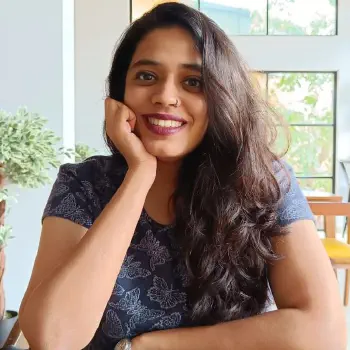
I walked into the mental health space with specific values (of empathy and kindness) and found the space, people and experiences to explore these values with more nuance as I continued to practice. My work also opened up pathways to build on these values with people and systems and helped translate them into tangible ideas and actions of change. This is also something that helps me stay close to my work and myself.
I see my work as a counsellor existing in the intersection of my values, my skills and how I view and experience the world. I see it translate into practice as a shared canvas that I can keep working on, expanding and changing with the people around me. Some of my most exciting moments have been to see a conversation shift ideas, thoughts and actions and pull on the thread of what they imagined was impossible. I also find it endlessly exciting that people walk into therapeutic spaces and have their reality acknowledged and honoured safely.
I hope for clients to take back maybe a fraction of what they were hoping for from therapy - relief, feeling heard and acknowledged, clarity or action steps. Through my conversations, I’ve realized that people walk into therapy with specific expectations, but I do hope they take back feeling safe in a conversation.
Counselling is a form of care that might involve unlearning, processing, learning, letting go and re-framing. While it is care, it can also feel difficult or frustrating because the process is sometimes long and slow. Counselling is also a choice that people need to make on their own when they feel ready. There is no timeline or framework to how it can look like but if the counselling space has the foundation of safety, the scaffolding of change has a solid bedrock on which it can be built.
I hope to build a relationship that feels safe and allows for open communication and trust while acknowledging the more often than not uni-directional nature of vulnerability. I hope the relationship honours boundaries and acts as a mould to shape the conversations towards what the client hopes for in therapy.
I’m not sure if there has been a single greatest learning, a lot of my conversations stay with me and allow for learning and reflections in different ways. Some of my learnings over the years has been to trust the process and the hard work that clients put in both in the session as well as outside, even if it doesn’t appear tangible to both of us sometimes. I also keep learning what ‘hope’ means, I have learnt to lean on humour and alsp to keep negotiating a midpoint where experiences and expertise can work together for change to happen.
I am constantly engaging in the process of building on my strengths through feedback from my clients, peers and my supervisor. Through them, I have understood that my ability to support my clients to make sense of their concerns through listening, visuals, metaphors, words, and resources is helpful to make the space accessible, comfortable and helps facilitate thinking. I am also able to hold onto my hopes and ideas as a therapist across different settings (individual and group work and advocacy work) and pivot based on what the context offers.
I love cooking, reading, consuming content and theorizing about it, stargazing and cycling. I’m also exploring music and writing a little more every year and am trying to get back into photography.
I follow an eclectic model, which draws from different schools of thought and involves using different approaches. This allows for a wider understanding of the client and their concerns and can help in building a rich toolkit. My work is also heavily influenced by understanding the client, their relationships, their context and how they interact with one another.
By never assuming heteronormativity, drawing from my experiences, constantly reading, advocating through conversations outside of therapy, curating safe resources and support systems, engaging with peers, supervisors and accessing training and sharing circles. Within the therapeutic space it would involve honouring the queer and trans clients’ stories and holding space for them to explore safely.
You live through that little piece of time that is yours, but that piece of time is not only your own life, it is the summing-up of all the other lives that are simultaneous with yours... What you are is an expression of History.
Hit the button below, ask questions, clear doubts or anything else you might need to clarify. You’ve got this! 🙂
Profile details
Learn about their approach, specialties, and how they can support your mental health journey.
Take the first step by reaching out to start a conversation about your needs.
Determine if this is the right match for you and plan your journey forward.
Not finding what you're looking for?
View other profilesWhile we carefully curate our listings, we encourage you to make your own informed decisions. Take time to research, ask questions, verify credentials and choose what feels right for you. Your comfort and safety is top priority.
We've developed a curation process over 7+ years, which allows us to carefully curate each inclusive and affirming mental health provider listed on our platform.
We have come a long way since we started in 2018, and have been adapting our curation process every day. From the time a therapist or support group reaches out to us, it takes about 1 - 2 months to complete the process.
We launched TheMindClan.com because we know firsthand how challenging it can be to find support for ourselves and our loved ones. We know that experiences of neurodivergence (like dyslexia, ADHD, autism, etc), or being from a marginalized community (LGBTQIA+, etc), can make it especially challenging to find support.
We understand the overwhelming feeling of scrolling through endless lists, wondering whom to trust, and not knowing what to expect.
If you appreciate our mission of making mental health care accessible and inclusive, and would love to bring this to your organization or collaborate with us, we'd be delighted to hear from you!