Ashmita is part of our handpicked list of therapists 🤗
Carefully curated
Peer-referred
Reach out directly. No Gatekeeping.
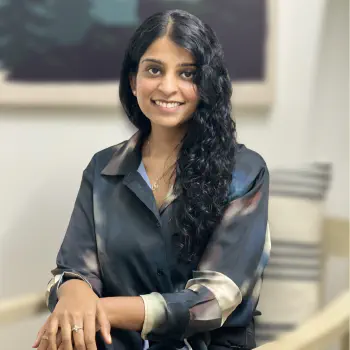
Ashmita (She/Her) is a 29 year old mental health therapist from Bengaluru. They practice online.
I work with both adolescents and adults. The concerns I support clients with can vary widely, from stress, anxiety, and grief to challenges with self-esteem, relationships, and identity. Many of my clients come in navigating transitions, uncertainty about the future, or feeling emotionally overwhelmed. I also work with individuals exploring questions around purpose, belonging, and self-worth, or those struggling with patterns that no longer serve them. I have a specialization in trauma-focused therapy, while holding the understanding that trauma can look different for different people, it isn’t always one big event, but can also live in the smaller, everyday experiences that shape how we see ourselves and the world around us. For me, it’s less about labeling a concern and more about understanding what it feels like for the person sitting across from me, meeting them where they are, with empathy and curiosity.
At an early age in life, I had to bear the brunt of the hurdles that life puts you through, in the form of difficult experiences, moments that felt heavier than I could carry at the time. What got me through those phases wasn’t any grand solution or advice, but the quiet presence of a few people who stood by me, people who made me feel accepted, seen, and that I belonged, especially when the world otherwise didn’t seem willing to offer that space. Over time, I realised how deeply those moments shaped me. Experiencing the value of support, genuine and non-judgmental, moulded me into the person I am today. It gave me a sense of direction without me even realising it then. I think it was a natural, almost instinctive pull to be that kind of presence for others, to offer what I had once needed, in the ways I could. That’s really what led me into the world of counselling and psychotherapy. Not as a planned career path, but as something that felt meaningful and aligned, a way of showing up for people from a place of understanding. Over the years, that initial instinct has only grown deeper, shaped by training, experience, and the privilege of witnessing people’s resilience. There’s something incredibly grounding about being able to hold space for another person, to offer support, but through an informed and thoughtful lens.
What excites me most about my work as a counsellor is the opportunity to meet new people and hold space for them, to be part of their journey and their inner world, and to walk through it together. Each person brings a different story, a new way of seeing the world, and through their experiences, I find myself constantly learning and unlearning. It’s humbling and deeply human. What keeps me drawn to this work is that the possibilities are endless. Every session and every story feels like a reminder of how intricately we’re all woven together. It can bring a touch of anxiety at times, but also a lot of excitement, because with every person comes something new to understand, connect with, and grow from.
After the first session, I hope my clients leave with a sense of safety and comfort, the feeling that they can show up as themselves, completely raw and unfiltered. I want them to know that they don’t have to have it all figured out, that this is a space where they can simply be. If they walk away with even a small sense of relief or hope that it’s okay to take things one step at a time, I think that’s a meaningful start.
If you’re thinking about seeking counselling, I’d first want to tell you that it’s okay to feel unsure, nervous, or even hesitant about taking this step. Therapy isn’t about being “fixed,” it’s about being understood. You don’t need to have everything figured out or know exactly what’s wrong before you come in. This space is meant for you to simply show up as you are, at your own pace. You have the right to feel safe, respected, and heard here. You have the right to ask questions, to take your time to trust, and to choose what you wish to share. Therapy isn’t a one-way process; it’s a collaboration where we walk through things together, with compassion and curiosity rather than judgment. If anything, I’d say allow yourself to begin, even if it feels uncertain. Sometimes the first step is just allowing yourself to be seen.
I hope to build a relationship with my clients that feels genuine, trusting, and human. One where they feel seen, heard, and accepted for who they are, not just for the parts they choose to show. I show up authentically, so they feel safe to show up authentically too. I want our space to feel like somewhere they can exhale, where they don’t have to perform, explain, or justify their feelings, but can simply be. For me, counselling is not about telling someone what to do, but about walking alongside them. I try to make the process as collaborative as possible by inviting clients to share what feels comfortable, checking in about how sessions are going, and co-creating goals that feel meaningful to them. I often remind clients that they’re the experts of their own lives, and my role is to bring curiosity, reflection, and perspective to support that journey.
One of my greatest learnings from clients has been how resilient people can be, often in the quietest, most unexpected ways. I’ve learned that healing doesn’t always look like big changes or breakthroughs, sometimes it’s in the smallest moments of honesty, self-compassion, or courage to show up again after a difficult day. My clients have taught me that every person’s story holds depth beyond what’s visible on the surface, and that as a therapist, being present and curious matters far more than having the right words. They’ve reminded me that growth isn’t linear, that people can hold both pain and strength at the same time, and that simply being witnessed with empathy can be deeply transformative.
One of my biggest strengths as a counsellor is that I’m able to be myself in the room. I show up with realness and bring humour when it feels right, because sometimes laughter can hold as much healing as tears. I think my strength lies in being able to offer empathy and comfort in ways that feel genuine and human. Clients often tell me that it helps them relax and be themselves too, which I see as one of the most meaningful parts of this work. I’m also willing to accept my mistakes, to keep learning and growing, and to continuously update myself. I come with the awareness that no one can be all-knowing, and that staying curious is an essential part of this journey. For me, being a good therapist means being open , open to feedback, to new perspectives, and to the constant process of evolving so I can keep putting my best foot forward for my clients.
In my free time, you’ll usually find me with music playing in the background, singing sometimes painting, sometimes lost in a movie, or planning the next trip I may or may not actually take. I love spending time with my people, cuddling my dog, and honestly, I’m also a big fan of doing absolutely nothing when I can.
My approach to therapy is trauma-focused and deeply relational and person-centered. I believe that healing begins with safety, trust, and understanding. I often draw from different approaches like Internal Family Systems (IFS), body-based practices, Cognitive Processing Therapy, and Polyvagal Theory,depending on what feels most supportive for the person I’m working with. In simpler terms, this means we explore not just what you’re going through, but also how your body and mind hold those experiences. Sometimes that looks like working with emotions or memories, sometimes it’s about noticing what’s happening in the body and supporting the nervous system to find regulation, and sometimes it’s about gently reframing thoughts and beliefs that may be keeping you stuck, all while prioritizing safety and connection. At its core, my work is guided by the belief that you already carry the capacity to heal within you. Therapy is simply the space where we uncover and nurture that together, at a pace that feels right for you.
Creating a safe and affirmative space for queer and trans* clients is an ongoing, conscious practice for me. I strive to make therapy a space where every part of a person, identity, expression, and lived experience is met with respect, curiosity, and care. I regularly engage with queer-affirmative training spaces, literature, and supervision to deepen my understanding of the unique stressors and strengths within queer and trans* experiences. I also learn from queer voices through community conversations, writings, and media to ensure that my understanding is informed by lived realities, not assumptions. Equally important is the process of unlearning, by examining my own conditioning, privilege, and biases, and holding myself accountable through continuous reflection and consultation. I see allyship not as a label but as a way of living, a continuous practice rooted in empathy, openness, and humility. My goal is to make the therapy room one where you never have to explain or defend your identity, where your truth is centered, and where healing unfolds on your own terms.
You don’t have to be fearless. Doing it afraid is just as brave.
Hit the button below, ask questions, clear doubts or anything else you might need to clarify. You’ve got this! 🙂
Profile details
Learn about their approach, specialties, and how they can support your mental health journey.
Take the first step by reaching out and start a conversation about your needs.
Determine if this is the right match for you and plan your journey forward.
Not finding what you're looking for?
View other profilesWhile we carefully curate our listings, we encourage you to make your own informed decisions. Take time to research, ask questions, verify credentials and choose what feels right for you. Your comfort and safety is top priority.
We've developed a curation process over 7+ years, which allows us to carefully curate each inclusive and affirming mental health provider listed on our platform.
We have come a long way since we started in 2018, and have been adapting our curation process every day. From the time a therapist or support group reaches out to us, it takes about 1 - 2 months to complete the process.
We launched TheMindClan.com because we know firsthand how challenging it can be to find support for ourselves and our loved ones. We know that experiences of neurodivergence (like dyslexia, ADHD, autism, etc), or being from a marginalized community (LGBTQIA+, etc), can make it especially challenging to find support.
We understand the overwhelming feeling of scrolling through endless lists, wondering whom to trust, and not knowing what to expect.
If you appreciate our mission of making mental health care accessible and inclusive, and would love to bring this to your organization or collaborate with us, we'd be delighted to hear from you!