Type: Therapist, Therapy, Psychologist (Currently on leave):
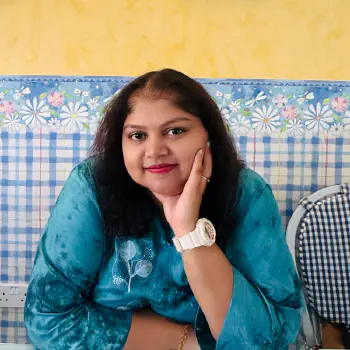
Roma Fernandes Picture

Roma Fernandes (She/Her)

Fee ₹2,500 (Breakdown in notes)
Medium Online
City Pune
Languages English, Hindi & Marathi

Roma (She/Her) is a 39 year old mental health therapist from Pune. They practice online.

For Roma Fernandes's contact details, click on the 'Reach Out' button on this page. Roma Fernandes's email address and their website , will be emailed to you from our platform. Roma Fernandes will be cc'd in that email, allowing you to reach out to them directly.

You can also check out our Custom GPT available on ChatGPT.com. And ask questions about our platform on https://chatgpt.com/g/g-685b8202f32c81919d9267a919a3c9cd.

For more questions, you can view https://themindclan.com/terms-of-service, and https://themindclan.com/faqs

FAQ
  • Concerns & people they work with:


    You may clarify the above details with them directly. Get to know them 👇

Not taking sessions.Accepts Participants via Email.

🌼
Roma is here thanks to Rasshmi Baagwe's thoughtful referral.

Key Details

Age & Experience
39 years old, with over 16 years of experience
Notes

Fee Breakdown:

  • Rs. 2500 - Individual Therapy for Adults
  • Rs. 3500 - Couples and Family Counseling
Session Duration
50-55 Minutes
Qualifications
• M.A. Clinical Psychology, SNDT Mumbai, 2009
Show all
Appointments Via
Email, WhatsApp
Payments Via
Bank Transfer, UPI/Google Pay
Available On
Saturday, Tuesday, Wednesday, Thursday, Friday
Roma is part of our handpicked list of therapists 🤗
Each therapist listed on TheMindClan.com goes through a careful curation process, that includes a questionnaire, peer-referrals, and one-on-one interviews with the therapist.
Carefully curated Peer-referred Reach out directly. No Gatekeeping.

When you reach out to a therapist, our platform gets you directly in touch with them. No gatekeeping, no extra charges or middleman. This might make the process of hearing back from them take a bit longer, but that's our way of ensuring you stay in control of your mental health journey.

Get To Know Roma:

  • Why did you choose to become a counsellor?

    I have always been naturally inclined to listen - to be present with people, especially in moments when they needed support the most. Over time, this instinct led me to explore psychology more deeply, and I began to see how this could be more than just a passion - it could be a meaningful career. As I moved further along this path, my love for the subject only deepened. Today, as a practicing psychologist, I have the privilege of holding space for people - to witness their stories, their struggles, their strength. Creating a safe, nurturing space for my clients is not just part of the work I do; it’s something I hold close to my heart.

  • What excites you about your work as a counsellor?

    What excites me most about my work as a counselor is the opportunity to truly connect with people especially those who may not have anyone else to lean on or guide them. To be trusted in someone’s most vulnerable moments is an incredible honour. Every day, I get to witness resilience, offer support, and hold space for healing. Even if I can bring about a small shift in someone’s life, it means everything. That’s what keeps me grounded and motivated and it’s why I choose this work, wholeheartedly, every single day.

  • What do you hope for your clients to experience after their first session with you?

    After the first session, I hope my clients walk away feeling seen, heard, and a little lighter. Even if nothing is ‘solved’ yet, I want them to know they’ve taken an important first step and that they don’t have to navigate things alone. I hope they leave with a sense of safety, a glimpse of hope, and the reassurance that therapy is a space where they can show up just as they are, without judgment. Most of all, I want them to feel that something about this space about our connection, feels right to them.

  • What would you wish to tell a client who is thinking about seeking counselling?

    If you’re thinking about seeking counseling, I want you to know that it’s okay to be unsure, scared, or even skeptical, that’s completely valid. Reaching out for support doesn’t mean you’re weak; it means you’re human and courageous enough to want something to shift. Therapy is not about being ‘fixed’, it’s about being understood.

    As a client, you have the right to feel safe, respected, and heard. You get to ask questions, set boundaries, and go at your own pace. You don’t have to share everything right away, and you don’t have to have it all figured out to begin. Therapy is a collaborative process - we work together, and your comfort matters.

    There are a lot of misconceptions that therapy is only for those in crisis, or that therapists give advice and solutions. But in truth, it’s a space where we explore, reflect, and make sense of things together. You’re the expert of your experience; I’m here to walk alongside you with care and curiosity.

    If you’re even considering therapy, it means something inside you is already reaching toward growth. That alone is worth honouring.

  • Describe the relationship that you would wish to build with your client in counselling.

    I hope to build a relationship with my clients that feels safe, respectful, and deeply human, one where they feel seen not just for their struggles, but for their strength, insight, and capacity to grow. I want the therapeutic space to feel like a pause from the noise, a place where they can bring their truth, in whatever shape it takes, without fear of judgment or pressure to ‘fix’ anything immediately.

    To make the counselling process collaborative, I’m intentional about checking in with clients regularly and asking what feels useful, what doesn’t, and what they’d like more or less of. I share reflections and observations, but always leave space for them to disagree, clarify, or take the conversation in a different direction. I invite them to bring in their language, their pace, and their understanding of their own life.

    I try not to position myself as the ’expert’ in the room, but rather as a fellow traveller, someone who brings curiosity, presence, and psychological tools, but believes that the client is the expert of their own story. We co-create the work as we go with honesty, care, and a shared commitment to their growth and well-being.

  • In your counselling work so far, what has been your greatest learning from your clients?

    One of my greatest learnings from clients has been the incredible strength of the human spirit not in loud, dramatic ways, but in quiet, everyday moments of showing up despite the weight they carry. I’ve learned that healing isn’t linear, and people don’t need to be ‘fixed’ they need to be witnessed, understood, and accepted as they are.

    Clients have taught me the value of slowing down, sitting with discomfort, and trusting the process even when there are no immediate answers. They’ve reminded me again and again that vulnerability is not weakness - it’s courage. And that small shifts, though they may seem subtle, can lead to profound change over time.

    More than anything, I’ve learned to hold deep respect for each person’s unique journey. Being invited into someone’s inner world is never something I take for granted it’s a privilege that continues to shape me, both as a counsellor and a person.

  • What are some of your strengths as a counsellor that you value and appreciate?

    One of the strengths I value most in myself as a counsellor is my ability to hold space to be fully present, without judgment, even when someone brings in their most vulnerable or difficult parts. I offer a calm, steady presence that helps clients feel safe enough to explore what’s really going on beneath the surface. I also bring deep empathy and curiosity into the room I genuinely want to understand my clients’ inner world, not just respond to what’s being said. I’m attuned to the unsaid, the pauses, the shifts in energy, and I use that to gently guide the work. I appreciate that I can offer warmth and structure at the same time creating a space that feels both comforting and containing. That balance has helped many clients feel held enough to do deep, sometimes difficult, work.

  • What are some of the things you like to do in your free time?

    In my free time I enjoy slowing down. Especially due to the nature of my work I am intentional about how I spend my free time. I enjoy resting because I know my mind and body needs it and helps me to manage stress and burnout. I enjoy nature and travelling so I invest a lot of time and finances in exploring new places. I enjoy connections so I spend time meeting extended family and friends when I can. I mindfully engage in things that will ground me and bring joy in my life.

  • What is the therapeutic approach you use? How would you describe it to someone who wants to consult you for therapy?

    My approach to therapy is relational, humanistic, and grounded in empathy. At its core, I believe that healing happens in a safe, trusting relationship one where you feel seen, heard, and accepted just as you are. I don’t follow a rigid, one-size-fits-all method. Instead, I draw from different approaches depending on what you need, this may include elements from person-centered therapy, psychodynamic work, and trauma-informed practices.

    I pay attention not just to what’s being said, but also to what’s underneath, your emotional patterns, relational dynamics, and the ways your past may be shaping your present. We might gently explore the roots of your struggles, while also finding ways to cope and care for yourself in the here and now.

    Above all, therapy with me is a collaborative process. You’re in the driver’s seat and I’m here to walk alongside you, ask meaningful questions, and help you make sense of things at your pace. There’s no pressure to ‘perform’ or have it all figured out. Just come as you are.

  • How do you make your therapeutic practice a safe and affirmative space for queer and trans* folx?

    Creating a safe and affirming space for queer and trans clients is an ongoing, conscious commitment and not a box to be checked. In my practice, I strive to bring in safety, respect, and autonomy. This means honouring each person’s identity, pronouns, relationships, and lived experiences without pathologizing or making assumptions. I aim to create a space where clients can show up as their full selves without fear of judgment.

    To support this, I actively engage with queer-affirmative frameworks and continue to educate myself through readings, trainings, supervision, and conversations within the community.

    Equally important is the process of unlearning - becoming aware of the ways in which cisnormativity, heteronormativity, and other systemic biases can show up in subtle forms, including within myself. I remain open to being called in and corrected, and I welcome feedback from clients about how I can make the space more affirming and responsive to their needs.

    This work requires ongoing reflection and accountability. I see it as a lifelong practice, one that is woven into how I show up, not just in therapy but in the world. My hope is that clients feel not only supported, but also celebrated, respected, and deeply heard.

  • The Quote Roma Resonates With

    Healing is not about becoming the best version of yourself, it’s about letting the softest, most alive version of you speak.

Ready To Reach Out To Roma?

Hit the button below, ask questions, clear doubts or anything else you might need to clarify. You’ve got this! 🙂

Next Steps For You

How To Seek Support From Roma

1. Discover more about Roma

Learn about their approach, specialties, and how they can support your mental health journey.

2. Schedule an Intro call

Take the first step by reaching out and start a conversation about your needs.

3. Gauge value fit, and take next steps

Determine if this is the right match for you and plan your journey forward.

Not finding what you're looking for?

View other profiles

While we carefully curate our listings, we encourage you to make your own informed decisions. Take time to research, ask questions, verify credentials and choose what feels right for you. Your comfort and safety is top priority.
