Type: Therapist, Therapy, Psychologist :
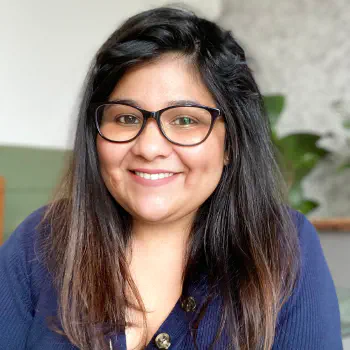
Akshada Anikhindi Picture

Akshada Anikhindi (She/Her)

Fee ₹2,000 - ₹4,100 (Breakdown in notes)
Medium Online
City Mumbai
Languages English, Hindi & Marathi

Akshada (She/Her) is a 38 year old mental health therapist from Mumbai. They practice online.

For Akshada Anikhindi's contact details, click on the 'Reach Out' button on this page. Akshada Anikhindi's email address and their website , will be emailed to you from our platform. Akshada Anikhindi will be cc'd in that email, allowing you to reach out to them directly.

You can also check out our Custom GPT available on ChatGPT.com. And ask questions about our platform on https://chatgpt.com/g/g-685b8202f32c81919d9267a919a3c9cd.

For more questions, you can view https://themindclan.com/terms-of-service, and https://themindclan.com/faqs

FAQ
  • Concerns & people they work with:


    You may clarify the above details with them directly. Get to know them 👇

Replies in 24 hours (1 day).Accepts Participants via Email.

🌼
Akshada is here thanks to Vrinda Saini's thoughtful referral.

Key Details

Age & Experience
38 years old, with over 2 years of experience
Notes

Fee Breakdown for Indian Residents:

  • Individual session (50 mins) - Rs.2000
  • Individual session (90 mins) - Rs.3600
  • Couple/ Family session (75 mins) - Rs.4000
  • Hypnotherapy Session - 60 mins - Rs.2500

Non-Indian Residents:

  • Individual session (50 mins) - Rs.2500
  • Individual session (90 mins) - Rs.4100
  • Couple/ Family session (75 mins) - Rs.4500
  • Hypnotherapy Session - (60 mins) - Rs.3000
Session Duration
50-55 Minutes
Qualifications
• M.A Psychology, IGNOU 2023
Show all
Appointments Via
Email, WhatsApp
Payments Via
Bank Transfer, UPI/Google Pay
Available On
Saturday, Tuesday, Wednesday, Thursday, Friday
Akshada is part of our handpicked list of therapists 🤗
Each therapist listed on TheMindClan.com goes through a careful curation process, that includes a questionnaire, peer-referrals, and one-on-one interviews with the therapist.
Carefully curated Peer-referred Reach out directly. No Gatekeeping.

When you reach out to a therapist, our platform gets you directly in touch with them. No gatekeeping, no extra charges or middleman. This might make the process of hearing back from them take a bit longer, but that's our way of ensuring you stay in control of your mental health journey.

Get To Know Akshada:

  • Why did you choose to become a counsellor?

    Honestly, I chose to become a counsellor because, during a time when I was struggling, I found it really hard to access therapy. Not because good therapists don’t exist, but because mental health wasn’t openly spoken about, and I didn’t know where to begin. That experience stayed with me.

    At the time, I was working in finance as a Chartered Accountant. On paper, everything looked fine, but something didn’t feel right. Over time, it became clear that I wanted to do work that felt more connected and more human. The decision to switch careers wasn’t easy, but it felt honest. And now, every time I sit across someone in session, I’m reminded of why this work matters.

  • What excites you about your work as a counsellor?

    What excites me most is witnessing those quiet or powerful shifts, when someone begins to see themselves with more compassion or finds the words for something they’ve been carrying for years. I love that this work invites depth, vulnerability, and real human connection.

    And honestly, every time a client experiences a breakthrough or a shift, I feel like a piece of the puzzle in my own life falls into place too. That reciprocity, that sense of shared growth, is what keeps me going.

  • What do you hope for your clients to experience after their first session with you?

    After the first session, I hope my clients leave feeling a little more seen and a little less alone. I want them to get a sense that this isn’t just a space where we talk about problems, but a space where they can show up as they are - messy, unsure, quiet, curious, or even funny.

    I believe therapy isn’t automatically a safe space just because we call it one. It’s something we co-create, with care and time. Sometimes it becomes a brave space too. There are days we sit in silence, laugh about something random, talk about life, travel, or TV shows. And other days, we hold tender truths together.

    Even if we haven’t figured everything out yet, I hope they leave with a sense that this space can hold clarity, healing, and lots of possibilities. And most importantly, that they will be met with curiosity, not judgment.

  • What would you wish to tell a client who is thinking about seeking counselling?

    If you’re thinking about starting therapy, it’s okay to not have it all figured out. You don’t need to be in crisis or have a mental health diagnosis to begin. Therapy can be a space to slow down, make sense of things, and feel supported through whatever you’re carrying.

    It’s also not about getting advice or being fixed. It’s a process of reflection, collaboration, and showing up for yourself in ways that maybe you haven’t had space to before.

    You have the right to ask questions, take your time, and find a therapist who feels like a good fit. This is your space, and you deserve to feel safe, seen, and respected in it.

  • Describe the relationship that you would wish to build with your client in counselling.

    I hope to build a relationship that feels real and human, one where the client knows this space belongs to them just as much as it does to me. I don’t believe in therapy as a space where I “know better” or hold all the answers. One of the principles I hold close, especially from narrative practice, is that the client is the expert of their own life. My role is to walk alongside, to witness, and to explore with them not to lead or diagnose from a distance.

    From the very first session, I make it a point to let clients know that feedback is not just welcome, but important. If something feels off or uncomfortable, I want them to bring it in. Because if we can’t have honest or difficult conversations here, how will we ever learn from each other?

    I also do regular check-ins, share reflections when it feels right, and offer different directions we can move in together. I believe the process works best when it’s shaped with the client, not just for them.

  • In your counselling work so far, what has been your greatest learning from your clients?

    One of my greatest learnings has been that healing doesn’t follow a timeline. People carry so much - grief, love, shame, hope and yet they keep showing up, even when it’s hard. That quiet courage has taught me to slow down, to trust the process, and to stop measuring progress in straight lines.

    I’ve also learned that presence matters more than perfect words. Just being able to sit with someone in their truth, without rushing to fix or explain, can create a shift. My clients remind me every day that therapy is not about having all the answers, but about creating space for what’s real.

  • What are some of your strengths as a counsellor that you value and appreciate?

    I think one of my strengths is that I bring my full self into the room, with curiosity, presence, and care. I’m able to sit with discomfort without rushing to fix it, and I try to hold space that feels steady and non-judgmental.

    Clients often say they feel safe being real with me, even when things feel messy. I trust my intuition, share reflections gently, and know when to pause or just stay quiet.

    Some of these strengths are still a work in progress, and I stay committed to supervision and self-work to keep showing up with honesty and care.

  • What are some of the things you like to do in your free time?

    In my free time, I enjoy slow days, good coffee (and sometimes a really good chai), and long pauses with my dog, Maya. I love the rains, you’ll often find me just sitting in my balcony, watching it pour. I’m a slow traveller at heart, someone who enjoys taking things in at my own pace. I also love shows and films that explore complex emotions, layered characters, or anything a little psychological or thrilling. Quiet time, naps, and journaling are all a big part of my self-care too.

  • What is the therapeutic approach you use? How would you describe it to someone who wants to consult you for therapy?

    My approach to therapy is collaborative, respectful, and rooted in depth. I believe that you are not your problems, and that your story deserves to be heard with curiosity, not judgment. Together, we explore what’s feeling heavy in the present, while also gently looking at how past experiences including early relationships, family patterns, and the environment you grew up in may still be shaping how you feel and relate today.

    I don’t offer quick fixes, but I do stay with you in the process. We work at a pace that feels right for you, with regular check-ins and space for feedback. I also sometimes bring in hypnotherapy when it feels like words aren’t enough or when we’re trying to work with something deeper.

    This is long-term work, and I believe real change happens slowly when we feel safe enough to be honest, to reflect, and to try something new. My lens is trauma-sensitive, queer-affirmative, and shaped by the belief that your experiences and identities matter, and deserve to be held with care.

  • How do you make your therapeutic practice a safe and affirmative space for queer and trans* folx?

    I’ve completed the Queer Affirmative Counselling Practice certification from MHI, and I know the work doesn’t stop there. I continue to learn through reading, community-led conversations, and peers who hold me accountable. I try to stay mindful of language, power dynamics, and what safety means for each person. While I haven’t worked with many trans clients yet, I hold feedback with care and stay committed to unlearning and doing better.

  • The Quote Akshada Resonates With

    There is a crack in everything, that’s how the light gets in.

    Leonard Cohen

Ready To Reach Out To Akshada?

Hit the button below, ask questions, clear doubts or anything else you might need to clarify. You’ve got this! 🙂

Next Steps For You

How To Seek Support From Akshada

1. Discover more about Akshada

Learn about their approach, specialties, and how they can support your mental health journey.

2. Schedule an Intro call

Take the first step by reaching out and start a conversation about your needs.

3. Gauge value fit, and take next steps

Determine if this is the right match for you and plan your journey forward.

Not finding what you're looking for?

View other profiles

While we carefully curate our listings, we encourage you to make your own informed decisions. Take time to research, ask questions, verify credentials and choose what feels right for you. Your comfort and safety is top priority.
