This meetup is part of our handpicked list of communities 🤗
Carefully curated
Community-led
Reach out directly. No Gatekeeping.
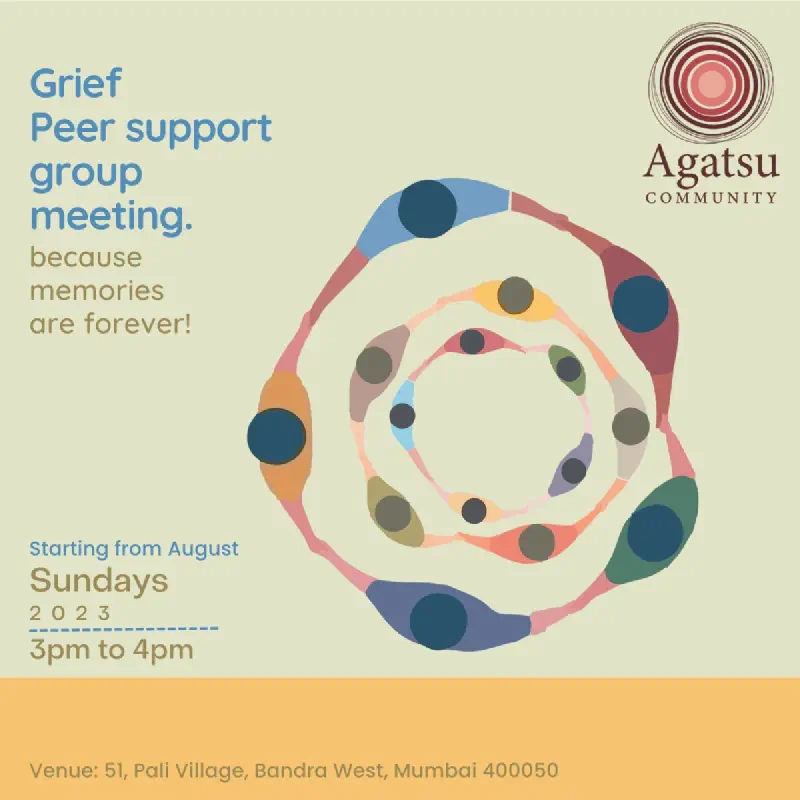
Safe space for people experiencing some kind of loss, not just of a loved one, but also a job, a relationship.
Community-hosted support group — do be mindful before making transactions. Fees and bookings are handled directly by the organizer. We'll share their contact details with you via email.
The idea is to provide a shared space for people to talk about their experiences, emotions, challenges and stories. It is not a place for providing or seeking therapy. It is a place where people know they are not alone and can reach out to their peers for support, as they navigate grief and loss.
Grief here does not simply refer to the loss of a loved one by death, but also includes loss through a breakup, a divorce, a separation, a job loss, among others.
The idea behind the group was to provide a safe space for people who have undergone loss. We realized that there aren’t any support groups which talk specifically about grief, which was surprising. Grief is a deeply complex emotion, with many underlying layers. It can also feel devastatingly lonely, and hence, we felt that a peer support might be an avenue for people to be able to share their grief, or simply find a space where others can talk about their grief, and not be judged or pitied.
Support group for people who have experienced some kind of loss, not just death of a loved one, but also loss of a job, a relationship, a marriage.
We understand how heavy and overwhelming grief can feel, with emotional as well as physical symptoms, which can last for very long for some people.
This support group is meant to allow people to express their feelings as well as share how they are navigating through the same (or struggling to).
We have a clinic with in-house therapists on a sliding scale of Rs.750 to Rs.50 depending on what the patient can afford. We practice Healthy Activity Program as an intervention for depression, as well as psychodynamic therapy. We also have a list of referrals. Our employees are also suicide prevention gatekeepers.
You can find details of the same on the Agatsu website.
Conversations around severe mental health disorders, harm to others, violence are conversations we aren’t equipped to support. We do not have the resources to help people with mental health disorders within our organisation. However, for that reason we have created a list of vetted psychologists and organisations that work in that field.
We start the session on time. The session is started with the general rules and protocols of the peer support, followed by an introduction of the facilitator. Participants can choose to disclose their name if they wish to, or they can choose to remain anonymous. We then get started into the topic of the meet. We ask starter questions or prompts that may help members contribute to the conversation. The session lasts for one hour.
The organisation has a certain code of conduct which all participants must follow. Any conversations that preach or put down any particular religion or political party is strictly not allowed. We also make sure that members or aware that the peer support is not a replacement for therapy, but rather a space to share, talk and listen. The peer support is confidential and any personal details that anyone shares will not be disclosed outside of the meet.
We hope the participants find a safe space where they can talk about their grief without any fear of judgement. We hope they take back a feeling of support. Their grief will not disappear, and it may not get lighter either, but they might feel comforted and supported and have a space where they can express their feelings.
Hit the button below, ask questions, clear doubts or anything else you might need to clarify. You’ve got this! 🙂
Learn about the gathering's approach, specialties, and how they can support your mental health journey.
Take the first step by reaching out to 'Grief Peer Meet (Grief Support Group)' and start a conversation about your needs.
Determine if this is the right match for you and plan your journey forward.
Not finding what you're looking for?
View other events & support groupsWhile we carefully curate our listings, we encourage you to make your own informed decisions. Take time to research, ask questions, verify credentials and choose what feels right for you. Your comfort and safety is top priority.